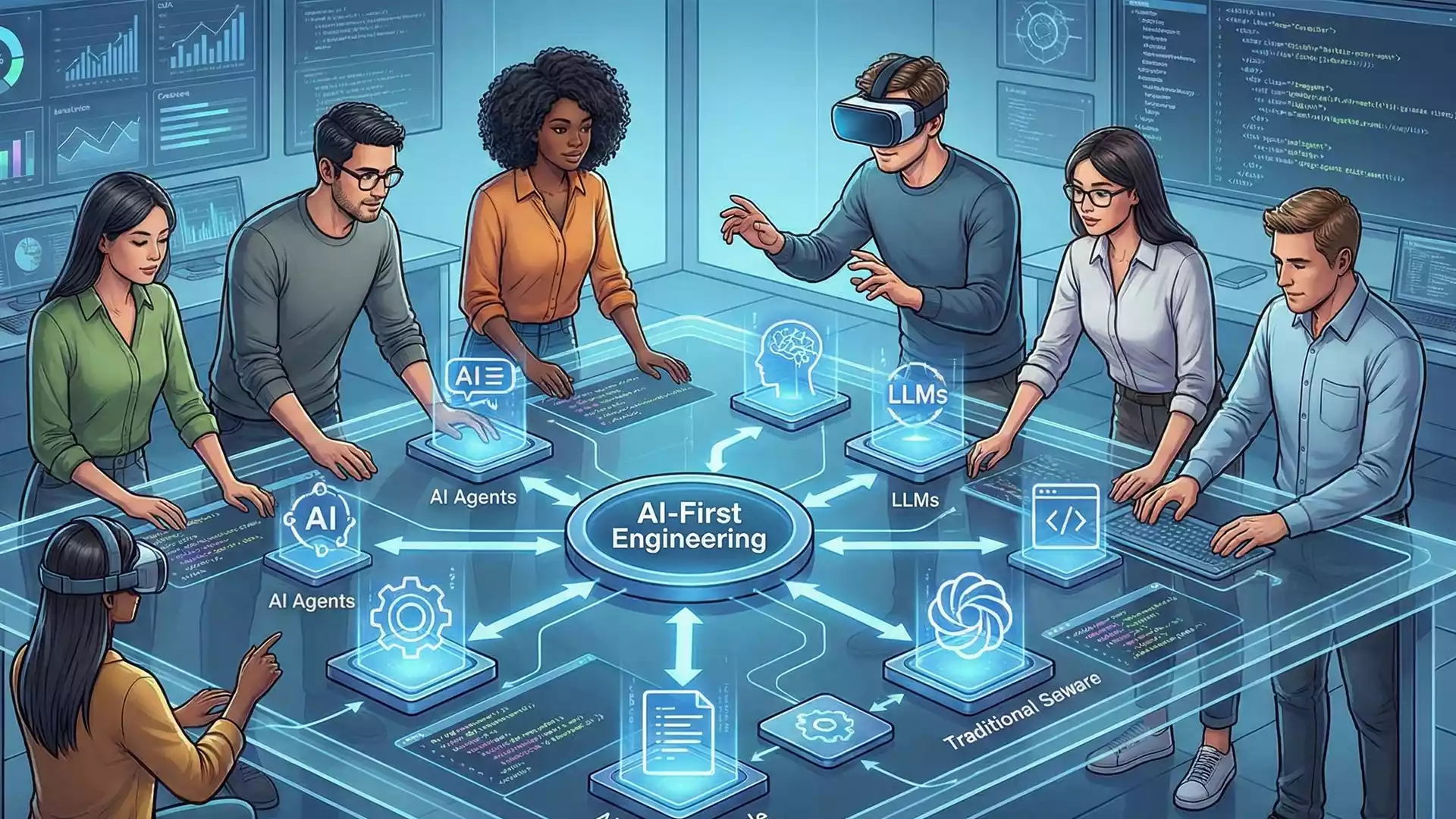
The tech world is witnessing a monumental shift. We are moving beyond simply using AI tools; we are entering the era of AI-First Engineering. This is not just a buzzword. It is a fundamental rethinking of how we build, test, and deploy software. As we approach 2026, understanding this trend is crucial for staying ahead. Defining AI-First Engineering in the Modern Tech Landscape So, what is AI-First Engineering? It is an approach where artificial intelligence is the central component of the software development lifecycle (SDLC). It goes beyond using AI coding assistants. Instead, AI agents are actively involved in architecting solutions, writing code, and even managing infrastructure. For example, tools like Zencoder’s AI Orchestration layer are helping teams transition from “vibe coding” to structured AI engineering. This shift is driven by the realization that current large language models (LLMs) can produce code that looks correct but may fail in production. Therefore, a more integrated approach is necessary. Furthermore, this new paradigm is about empowering developers, not replacing them. AI handles repetitive tasks, freeing up human engineers for creative problem-solving. This is evident in the rise of open-source projects like AGENTS.md, which are setting standards for AI coding agents. How AI-First Engineering Impacts Your Development Process The impact of AI-First Engineering is profound. It affects everything from project management to quality assurance. Accelerating Development with Autonomous AI Agents One of the most significant changes is the introduction of autonomous AI agents. These agents can execute complex tasks without constant human intervention. For instance, Meta’s acquisition of Manus AI signals a move towards “agentic” systems that can handle end-to-end processes. Imagine an AI that not only writes the code but also tests it and deploys it. This level of automation can drastically reduce time-to-market. Companies that embrace this will have a significant competitive advantage. For those looking to build their own platforms, our Website Development services can help you integrate these cutting-edge technologies. We understand the importance of staying ahead of the curve. Enhancing Quality and Security through Generative Simulators Another key aspect is the use of generative simulators for testing. Companies like Patronus AI are developing generative simulators to provide adaptive training environments for agents. This ensures that AI models are robust and reliable before they are deployed. Furthermore, security is being integrated earlier in the lifecycle, a practice known as DevSecOps. JFrog, for example, has launched an end-to-end DevSecOps platform specifically for AI applications. At KrustyLab, we prioritize security in all our projects. You can read about our commitment to secure practices in our Privacy Policy. Preparing for the AI-First Future To prepare for this future, organizations must invest in the right tools and training. It is not just about buying the latest AI software. It is about fostering a culture of innovation and adaptability. Here are some steps you can take: The transition to AI-First Engineering is inevitable. By embracing it now, you can position your organization for success in the years to come. Check out our Logs for more insights into the latest tech trends. In conclusion, AI-First Engineering is more than just a trend. It is the future of software development. It promises faster delivery, higher quality, and greater innovation. Are you ready to make the shift? Contact us today to learn how we can help you navigate this exciting new landscape.

MongoBleed Vulnerability Alert: Immediate Action Required for Security
As the year ends, a critical threat has emerged in the tech landscape. Consequently, we must issue a MongoBleed Vulnerability Alert to all our clients and readers. This severe security flaw, officially tracked as CVE-2025-14847, currently affects over 87,000 MongoDB servers worldwide. Therefore, understanding this risk is vital for protecting your sensitive data. Understanding the Critical CVE-2025-14847 Impact This specific vulnerability allows attackers to read server memory without any authentication. Essentially, cybercriminals can extract passwords, API keys, and other secrets remotely. They achieve this by exploiting a flaw in the zlib compression protocol. Unfortunately, this means your “secure” database might be leaking information right now. According to recent reports from BleepingComputer, exploitation is already active in the wild. Furthermore, this is not just a theoretical risk. The team at Wiz.io confirmed that 42% of cloud environments are potentially exposed. Thus, ignorance is not an option. Urgent Remediation Steps for Database Admins You must act immediately to secure your infrastructure. First, check if your MongoDB instance uses zlib compression. If it does, you are likely vulnerable. The most effective fix is to upgrade to the latest patched version released by MongoDB. However, if you cannot patch immediately, there is a temporary workaround. You should disable zlib compression in your configuration settings. This simple step stops the specific exploit path. Additionally, you should consult the CISA database for official federal guidance. For those using our managed services, please check our Logs for specific patch schedules. We also recommend reviewing our Services page to see how we handle such incidents. Future-Proofing Your Data Infrastructure Security is an ongoing process, not a one-time fix. After addressing the MongoBleed Vulnerability Alert, you should audit all your systems. Regular scans help identify hidden weaknesses. Tools from companies like Rapid7 can assist in this continuous monitoring. Moreover, consider how your applications handle data. Our MPCheck tool can help verify system integrity on mobile endpoints. Similarly, secure your web applications by exploring our Website Development standards. If you are unsure about your status, please Contact Us today. Our team is ready to assist you. Also, stay updated on our KlokHub platform for freelancer security tips. In conclusion, the MongoBleed Vulnerability Alert demands your full attention. By taking decisive action now, you prevent data loss. Stay vigilant and keep your systems updated.