tech krustylab

Real World Asset Tokenization

Real World Asset Tokenization: Reshaping Digital Finance

Real World Asset Tokenization is changing how we view wealth. Consequently, investors can easily manage physical properties through digital ledgers. Indeed, the financial sector embraces this modern strategy rapidly. First, this approach breaks down massive properties into affordable pieces. Therefore, everyday people can buy fractions of commercial real estate. Moreover, digital asset ownership unlocks previously inaccessible, exclusive markets. You can learn more about our approach at our Krustylab Home page. How Real World Asset Tokenization Works Essentially, blockchain networks securely store the proof of property. For instance, a physical diamond becomes a trackable digital token. As a result, tokenized investments offer enhanced transparency and speed. Furthermore, buyers bypass traditional, slow banking institutions entirely. Check out our Krustylab Services for strategic guidance. Additionally, external platforms like Bloomberg Crypto cover these blockchain finance trends regularly. The Rise of Digital Asset Ownership Meanwhile, global markets demand better liquidity for physical assets. Real World Asset Tokenization directly solves this liquidity problem. Consequently, sellers access global buyers without geographic limitations or delays. In addition, smart contracts automatically execute complex financial agreements instantly. Read more insights on our Krustylab Blog. Likewise, you can study market shifts at CoinDesk. Clearly, traditional banking struggles with the speed of modern commerce. Therefore, digital ledgers present a vital solution for financial efficiency. Similarly, real estate developers leverage this technology for faster fundraising. Specifically, they mint tokens to represent shares in a building. Thus, capital flows seamlessly across borders with minimal transaction fees. Real World Asset Tokenization Benefits Primarily, fractional ownership dramatically lowers the traditional entry barriers. Also, tokenized investments provide 24/7 trading on decentralized exchanges. Thus, individuals control their portfolios without waiting for market hours. Furthermore, our team details these benefits on the Krustylab About Us page. For global perspectives, visit Forbes Digital Assets. Besides, this innovation eliminates costly middlemen from the investment process. Consequently, investors enjoy higher returns and reduced administrative overhead costs. Eventually, every physical asset could exist digitally on the blockchain. Real World Asset Tokenization promises a fairer, more inclusive economy. Addressing Blockchain Finance Trends However, regulatory compliance remains a hurdle for this sector. Hence, developers build advanced compliance protocols into the tokens. Ultimately, Real World Asset Tokenization will redefine secure, borderless transactions. Accordingly, CoinTelegraph continuously monitors these legal and structural changes. Additionally, Reuters Technology reports on how banks adapt today. Surely, embracing these tokenized investments guarantees a competitive market advantage. Importantly, users verify all ownership records publicly and securely online. Ultimately, this transparency builds unprecedented trust among global financial participants. To discuss your financial strategy, visit the Krustylab Contact page.

Real World Asset Tokenization: Reshaping Digital Finance Read More »

Multiple advanced solid-state battery cells being handled with precision tools in a clean, brightly lit modern laboratory.

Breakthroughs in Solid-State Batteries

The automotive world is buzzing with excitement. A significant shift is occurring in electric vehicle (EV) technology. This transformation stems from potential breakthroughs in solid-state batteries. This nascent technology promises to overcome several key limitations of traditional EV cells. For companies like ours, which are focused on innovative technology solutions, staying current on these vital EV advancements is paramount. We appreciate that efficient technology, whether powering your vehicle or your operations, fundamentally drives your business’s ultimate success. You can explore our dedication to enabling such success further at Krustylab. Realizing Breakthroughs in Solid-State Batteries So, what exactly are these much-discussed advancements? Unlike standard lithium-ion batteries that utilize liquid electrolytes, solid-state designs employ solid ones. This fundamental change greatly improves operational safety and enables significantly greater energy density. Furthermore, this directly leads to potentially much longer driving ranges for electric vehicles. Manufacturers are also projecting incredibly fast charging times, which will dramatically reduce common pain points like long refueling breaks for all users. Such battery innovations could definitely accelerate wider, global EV adoption. At Krustylab, we always admire highly scalable solutions that improve overall efficiency, and this technology certainly qualifies for that definition. Key Benefits of Solid-State EV Technology The advantages extend beyond mere convenience. We anticipate enhanced performance and significantly longer lifespans for vehicles equipped with these cells. Such developments are genuinely inspiring to observe in the broader tech landscape. For many businesses, realizing benefits from smart innovation strategies is the core goal. Consequently, we see parallel value in delivering affordable, powerful solutions to our clients’ unique operational challenges, much like these battery advancements revolutionize mobility. For deeper insights, you might check official government sites for details on battery research. While the promise remains clear, some significant engineering hurdles do persist. Manufacturing scalability is challenging, and current material costs are quite high. Indeed, creating cost-effective solid electrolytes and integrating them into reliable, large-scale designs proves to be a very complex endeavor. However, significant progress is being made by researchers and companies globally. Overcoming Scaling Challenges in Next-Gen Battery Solutions Nevertheless, engineers are proactively finding solutions and optimizing production. We firmly believe such breakthroughs represent the next logical step. By continuously working on refining manufacturing processes and material science, the industry is steadily moving closer to commercially viable production. This persistent, problem-solving approach perfectly mirrors how we approach complex challenges within our own managed technology services. Every obstacle represents an opportunity for a smarter, more efficient solution. The Future Landscape: Faster Charging and Beyond Furthermore, the proliferation of EVs with massive ranges and rapid charging capabilities could truly revolutionize fleet operations. Logistics companies could see substantial reductions in their overall operating expenses. Moreover, this entire transition creates numerous unique opportunities for broader infrastructure development and essential smart grid integration. Indeed, staying informed about these pivotal breakthroughs in solid-state batteries and other key trends is just another effective way we can help ensure your forward-thinking business is fully prepared for the future, a topic that we are always enthusiastic to discuss with you. We are always ready to explore how renewable energy tech can intersect with smart connectivity and other digital advancements that we specialize in deploying and managing. The future is electric, but it is also powered by the right technology partnerships, much like the relationship we aim to build with every unique business that connects with us. Our goal is to make these advanced possibilities truly accessible to everyone, regardless of their size or sector.

Breakthroughs in Solid-State Batteries Read More »

Developers utilizing serverless cloud computing solutions to build scalable applications.

Why Serverless Cloud Computing Solutions Dominate Tech Today

The tech industry constantly evolves. Currently, serverless cloud computing solutions represent a massive shift. Developers no longer worry about underlying servers. Instead, they focus entirely on writing excellent code. Consequently, businesses innovate faster than ever before. Exploring Serverless Architecture Benefits Traditional hosting requires constant maintenance and patching. However, serverless architecture benefits eliminate these tedious chores. Cloud providers automatically allocate compute resources on demand. Therefore, you only pay for exactly what you use. This financial efficiency attracts many modern startups. Additionally, scaling happens instantly during unexpected traffic spikes. For example, AWS Lambda handles millions of requests seamlessly. Integrating Event-Driven Cloud Services Modern applications rely heavily on event-driven cloud services. These systems react quickly to user actions or data changes. Furthermore, serverless cloud computing solutions integrate perfectly with them. You can trigger functions when someone uploads a file. Similarly, database updates can spark immediate background processes. Microsoft Azure Functions offers robust tools for this purpose. Meanwhile, Google Cloud Run simplifies containerised deployments. Best Practices for Managing Serverless Applications Navigating this new landscape requires careful planning. Managing serverless applications successfully demands proper monitoring tools. Without visibility, debugging complex microservices becomes a nightmare. Therefore, developers must implement centralised logging early on. In addition, securing these distributed functions remains a top priority. Teams must utilize strict identity and access management policies. Cloudflare Workers provide excellent security at the edge. Also, IBM Cloud Code Engine helps streamline workloads efficiently. How Krustylab Complements Serverless Cloud Computing Solutions At Krustylab, we closely follow emerging tech trends. For instance, our team values sustainable green computing environments. Moreover, efficient infrastructure directly impacts overall software quality. We also explore platform engineering adoption trends continuously. These innovations heavily influence enterprise low-code application development. Ultimately, seamless updates depend on scalable backend architectures. You can see this in the latest myHoneypot app update. Even smaller tools like MPCheck benefit from robust cloud foundations. The Future of Serverless Cloud Computing Solutions Looking ahead, the ecosystem will certainly grow more robust. Consequently, vendor lock-in concerns might slowly fade away. Open-source frameworks continually emerge to standardise deployments. Therefore, migrating between different providers will become much simpler. Indeed, serverless cloud computing solutions empower developers immensely. They remove unnecessary friction from the entire software lifecycle. Ultimately, this paradigm shift reshapes how we build digital products. Every modern business should evaluate this powerful technology today. Doing so ensures long-term competitiveness in a fierce market.

Why Serverless Cloud Computing Solutions Dominate Tech Today Read More »

Smartphone screen displaying the new myHoneypot app update home interface

Experience the Exciting myHoneypot App Update

The wait is finally over for trivia lovers everywhere. We have officially released the highly anticipated myHoneypot app update. This version brings fresh energy to your daily quiz routine. Furthermore, players can now enjoy smoother interactions. The development team worked hard on these improvements. Consequently, the app feels faster and more responsive. You will immediately notice the difference upon logging in. Discover the myHoneypot App Update Features What exactly changes with this new version? First, the core quiz engine works more efficiently. Therefore, questions load instantly without delay. You can challenge your brain without technical interruptions. Additionally, the interface looks cleaner and sharper. We believe that visual clarity helps concentration. Moreover, navigation is now incredibly intuitive. You can find your favorite categories easily. For example, jump straight into science or history. Also, we fixed previous minor bugs. Thus, your experience remains seamless and enjoyable. Do not forget to check our Home page for more news. Enjoy Limited Quiz Event Challenges The most thrilling part involves the new event system. The myHoneypot app update introduces unique limited-time competitions. These events offer special rewards for top players. However, time is always short. You must act quickly to secure your spot. Challenge your friends to beat your high score. Furthermore, these events test specific knowledge areas. You might face a sudden pop culture quiz. Alternatively, a geography challenge could appear. Success requires quick thinking and sharp memory. While playing, you might want to explore other tools. Check out KlokHub for productivity solutions. Similarly, MPCheck offers great utility services. We constantly expand our digital ecosystem. However, the focus today remains on trivia fun. Why Download the Latest Gameplay Improvements? Updating ensures you never miss out. Old versions lack these new exciting features. Therefore, you should visit the store immediately. Android users can find us on the Google Play Store. iOS users should check the Apple App Store. Staying updated also guarantees better security. We prioritize user data safety above all. In addition, you gain access to improved support. If issues arise, Contact us directly. Our team responds quickly to all inquiries. You can also explore our lifestyle options. Visit sweetKorn for interesting updates. Likewise, Plum Acres provides unique offerings. The Krustylab family continues to grow. Finally, stay connected with us online. Follow our journey on Twitter for daily tips. Join our vibrant community on Facebook. We also have a presence on Yelp for reviews. Additionally, you can reach us via WhatsApp. Download the myHoneypot app update today. Start winning big with your knowledge.

Experience the Exciting myHoneypot App Update Read More »

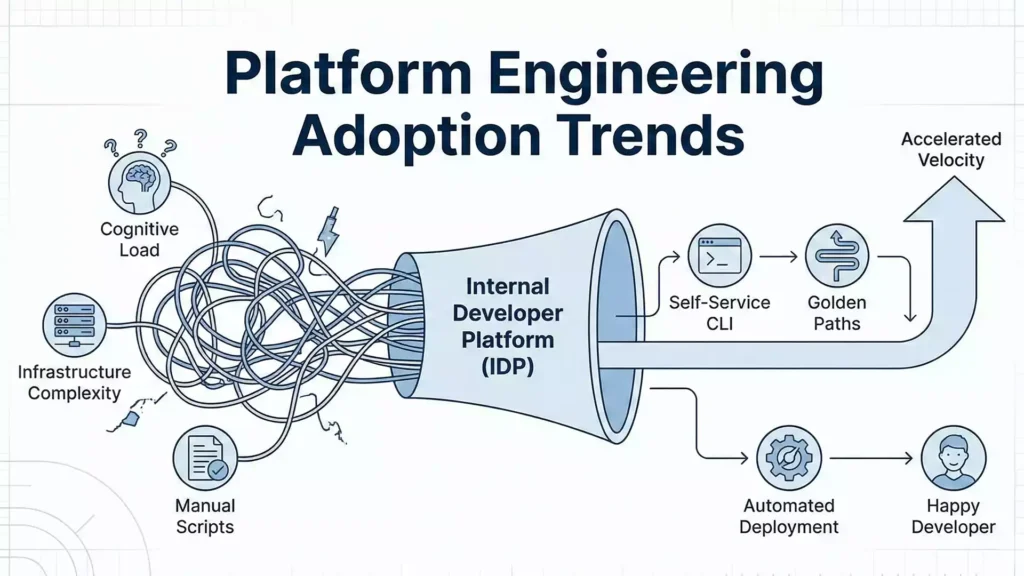
A diagram illustrating the concept of an Internal Developer Platform (IDP) streamlining the software delivery lifecycle, relevant to platform engineering adoption trends

The Surge of Platform Engineering Adoption Trends in 2026

Developers are facing increasing complexity today. Cloud-native technologies, Kubernetes, and microservices, while powerful, have added significant cognitive load to daily tasks. Consequently, organizations are searching for sustainable solutions to keep their teams efficient and happy. This is where current platform engineering adoption trends come into play. They signal a vital shift in how modern software is built and delivered at scale. Understanding the Core of Platform Engineering Historically, the DevOps movement promised speed and agility by breaking down silos. However, in practice, it often led to “you build it, you run it,” overloading developers with infrastructure tasks. Platform engineering offers a distinct, more sustainable approach. It focuses on building and maintaining an internal developer platform (IDP). These platforms act as a “paved road” or a curated set of tools, services, and workflows for software delivery. By standardizing tools and workflows, platform teams empower application developers. They provide self-service capabilities that abstract away complex backend operations like Kubernetes configuration or database provisioning. This approach is central to modern platform engineering adoption trends, allowing coders to focus on what they do best: writing code that solves business problems. Why Internal Developer Platforms Are the Future Why is this shift happening right now? The primary driver is the urgent need for improving developer productivity and experience. According to industry analysts like Gartner, reducing cognitive load leads directly to better code quality and faster time-to-market. An effective IDP, which can be built using open-source frameworks like Spotify’s Backstage, centralizes documentation, service templates, and deployment pipelines. This centralization is a key benefit highlighted by current platform engineering adoption trends. It ensures that security and compliance best practices are baked into the system by default. Furthermore, it significantly accelerates onboarding for new team members, who no longer need to navigate a maze of disconnected tools. Navigating the Shift: From DevOps to Platform Teams Transitioning from a traditional DevOps model to a platform-centric one requires a significant cultural change. It is not just about buying new tools. Organizations must treat their internal platform as a product, with developers as their customers. Applying product management principles to internal tooling is crucial. You must conduct user research to understand your internal customers’ friction points. This mindset shift is heavily influenced by frameworks defined in books like Team Topologies. At KrustyLab, our web design and development teams understand the importance of building user-centric tools, whether for external clients or internal teams. The Cloud Native Computing Foundation (CNCF) is also actively defining best practices in this rapidly evolving space through its dedicated working groups. Following these evolving platform engineering adoption trends ensures your organization stays competitive and resilient. Leading tech publications like The New Stack frequently analyze these trends, offering valuable insights for leaders. Conclusion Embracing platform engineering is no longer an option for scaling enterprises; it is a necessity for sustainable software delivery. By focusing on the developer experience through robust IDPs, businesses can unlock unprecedented velocity. To learn more about modernizing your tech strategy, check out our blog or read more about us. For a consultation on improving your internal systems, feel free to contact us today.

The Surge of Platform Engineering Adoption Trends in 2026 Read More »
Graph showing the rise of Agentic AI cyber attacks in 2026

Agentic AI Cyber Attacks: The 2026 Security Frontier

The digital landscape has shifted dramatically this year. Agentic AI cyber attacks are now the primary threat facing businesses and individuals in 2026. Unlike older threats, these autonomous programs do not just follow scripts. Instead, they think, adapt, and execute complex breaches without human guidance. Consequently, traditional firewalls often fail to stop them. Understanding Agentic AI Cyber Attacks Hackers deploy these intelligent agents to infiltrate networks silently. Agentic AI cyber attacks leverage machine learning to mimic legitimate user behavior. Therefore, they bypass standard detection tools easily. For instance, an AI agent might study an employee’s email style. Then, it crafts a perfect phishing message. This level of sophistication makes social engineering harder to spot. Furthermore, these attacks occur at machine speed. Human analysts cannot keep up with the rapid pace of autonomous exploits. As a result, organizations must adopt AI-driven defenses. You can learn more about securing your infrastructure by visiting our Services page. We provide cutting-edge solutions for these modern risks. The Rise of Shadow Agents A major component of agentic AI cyber attacks is the “Shadow Agent.” These are unauthorized AI tools used within a company. Employees often use them for productivity. However, they create blind spots in security. Attackers hijack these tools to exfiltrate data. Thus, visibility is crucial. You should regularly check our Logs for the latest updates on vulnerability patterns. Staying informed is your first line of defense. Moreover, Google Cloud Security reports a surge in these incidents. Security teams must now monitor both human and non-human identities. Defending Against Autonomous Threats To combat agentic AI cyber attacks, you need a proactive strategy. First, implement “Zero Trust” architecture. This method verifies every user and device. Second, use AI to fight AI. Automated defense systems can detect anomalies faster than any human. In addition, reliable threat intelligence is vital. Platforms like The Hacker News offer daily updates on these evolving threats. Also, CISA provides guidelines for enterprise security. Conclusion The era of agentic AI cyber attacks demands vigilance. We must adapt our defenses immediately. Technology evolves, and so must we. If you need assistance, please Contact us today. Protect your digital assets from the next generation of threats. Finally, explore resources from Palo Alto Networks for deeper technical insights.

Agentic AI Cyber Attacks: The 2026 Security Frontier Read More »

The Rise of AI-First Engineering: A Paradigm Shift in Software

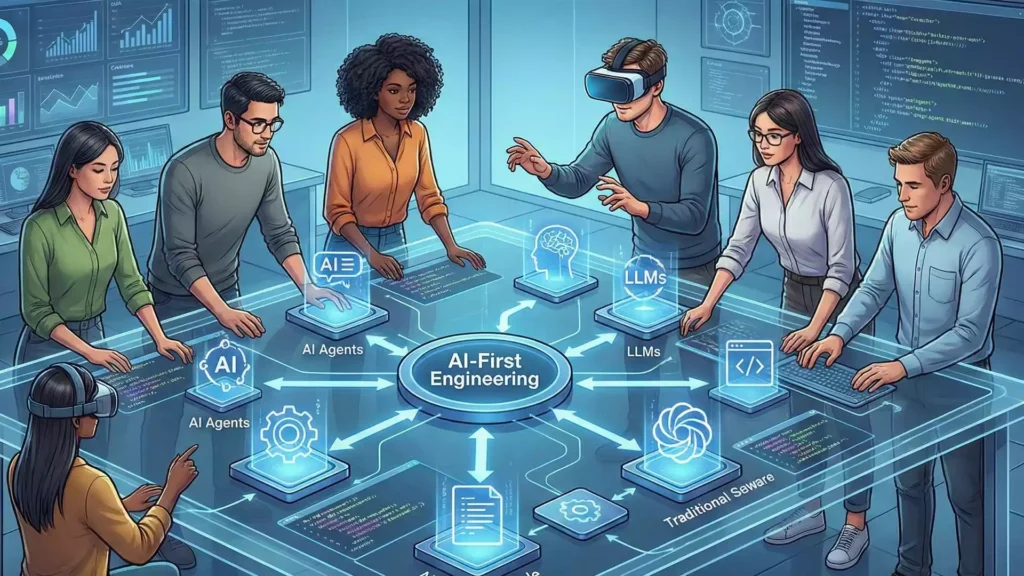
The tech world is witnessing a monumental shift. We are moving beyond simply using AI tools; we are entering the era of AI-First Engineering. This is not just a buzzword. It is a fundamental rethinking of how we build, test, and deploy software. As we approach 2026, understanding this trend is crucial for staying ahead. Defining AI-First Engineering in the Modern Tech Landscape So, what is AI-First Engineering? It is an approach where artificial intelligence is the central component of the software development lifecycle (SDLC). It goes beyond using AI coding assistants. Instead, AI agents are actively involved in architecting solutions, writing code, and even managing infrastructure. For example, tools like Zencoder’s AI Orchestration layer are helping teams transition from “vibe coding” to structured AI engineering. This shift is driven by the realization that current large language models (LLMs) can produce code that looks correct but may fail in production. Therefore, a more integrated approach is necessary. Furthermore, this new paradigm is about empowering developers, not replacing them. AI handles repetitive tasks, freeing up human engineers for creative problem-solving. This is evident in the rise of open-source projects like AGENTS.md, which are setting standards for AI coding agents. How AI-First Engineering Impacts Your Development Process The impact of AI-First Engineering is profound. It affects everything from project management to quality assurance. Accelerating Development with Autonomous AI Agents One of the most significant changes is the introduction of autonomous AI agents. These agents can execute complex tasks without constant human intervention. For instance, Meta’s acquisition of Manus AI signals a move towards “agentic” systems that can handle end-to-end processes. Imagine an AI that not only writes the code but also tests it and deploys it. This level of automation can drastically reduce time-to-market. Companies that embrace this will have a significant competitive advantage. For those looking to build their own platforms, our Website Development services can help you integrate these cutting-edge technologies. We understand the importance of staying ahead of the curve. Enhancing Quality and Security through Generative Simulators Another key aspect is the use of generative simulators for testing. Companies like Patronus AI are developing generative simulators to provide adaptive training environments for agents. This ensures that AI models are robust and reliable before they are deployed. Furthermore, security is being integrated earlier in the lifecycle, a practice known as DevSecOps. JFrog, for example, has launched an end-to-end DevSecOps platform specifically for AI applications. At KrustyLab, we prioritize security in all our projects. You can read about our commitment to secure practices in our Privacy Policy. Preparing for the AI-First Future To prepare for this future, organizations must invest in the right tools and training. It is not just about buying the latest AI software. It is about fostering a culture of innovation and adaptability. Here are some steps you can take: The transition to AI-First Engineering is inevitable. By embracing it now, you can position your organization for success in the years to come. Check out our Logs for more insights into the latest tech trends. In conclusion, AI-First Engineering is more than just a trend. It is the future of software development. It promises faster delivery, higher quality, and greater innovation. Are you ready to make the shift? Contact us today to learn how we can help you navigate this exciting new landscape.

The Rise of AI-First Engineering: A Paradigm Shift in Software Read More »

MongoBleed Vulnerability Alert graphic showing database security warning

MongoBleed Vulnerability Alert: Immediate Action Required for Security

As the year ends, a critical threat has emerged in the tech landscape. Consequently, we must issue a MongoBleed Vulnerability Alert to all our clients and readers. This severe security flaw, officially tracked as CVE-2025-14847, currently affects over 87,000 MongoDB servers worldwide. Therefore, understanding this risk is vital for protecting your sensitive data. Understanding the Critical CVE-2025-14847 Impact This specific vulnerability allows attackers to read server memory without any authentication. Essentially, cybercriminals can extract passwords, API keys, and other secrets remotely. They achieve this by exploiting a flaw in the zlib compression protocol. Unfortunately, this means your “secure” database might be leaking information right now. According to recent reports from BleepingComputer, exploitation is already active in the wild. Furthermore, this is not just a theoretical risk. The team at Wiz.io confirmed that 42% of cloud environments are potentially exposed. Thus, ignorance is not an option. Urgent Remediation Steps for Database Admins You must act immediately to secure your infrastructure. First, check if your MongoDB instance uses zlib compression. If it does, you are likely vulnerable. The most effective fix is to upgrade to the latest patched version released by MongoDB. However, if you cannot patch immediately, there is a temporary workaround. You should disable zlib compression in your configuration settings. This simple step stops the specific exploit path. Additionally, you should consult the CISA database for official federal guidance. For those using our managed services, please check our Logs for specific patch schedules. We also recommend reviewing our Services page to see how we handle such incidents. Future-Proofing Your Data Infrastructure Security is an ongoing process, not a one-time fix. After addressing the MongoBleed Vulnerability Alert, you should audit all your systems. Regular scans help identify hidden weaknesses. Tools from companies like Rapid7 can assist in this continuous monitoring. Moreover, consider how your applications handle data. Our MPCheck tool can help verify system integrity on mobile endpoints. Similarly, secure your web applications by exploring our Website Development standards. If you are unsure about your status, please Contact Us today. Our team is ready to assist you. Also, stay updated on our KlokHub platform for freelancer security tips. In conclusion, the MongoBleed Vulnerability Alert demands your full attention. By taking decisive action now, you prevent data loss. Stay vigilant and keep your systems updated.

MongoBleed Vulnerability Alert: Immediate Action Required for Security Read More »

Sustainable data centers

Sustainable Data Centers: The 2025 Green Computing Imperative

The year 2025 will be remembered for massive AI adoption. However, this technological boom brought a hidden cost: unprecedented energy consumption. Today, December 23, the industry focus has shifted sharply toward sustainable data centers. We are no longer just building faster; we must build greener. This shift is essential for long-term viability and regulatory compliance. The Rise of Green Computing Infrastructure The global demand for computational power has tripled since 2023. Consequently, traditional facilities are struggling to cope ethically with the load. Modern sustainable data centers now utilize advanced green computing infrastructure to manage this demand. For example, liquid immersion cooling is finally becoming standard practice in new builds. This method significantly reduces electricity usage compared to traditional air cooling. Major providers like Google Cloud have recently committed to 24/7 carbon-free energy. This commitment sets a new industry benchmark that others must follow. Furthermore, the Uptime Institute now includes sustainability metrics in their tier standards. Alt Text: Interior view of sustainable data centers utilizing liquid cooling technology and renewable energy. Achieving Carbon-Neutral Data Storage Achieving truly carbon-neutral data storage is the next major hurdle for the sector. It involves more than just buying carbon offset credits. Modern facilities must integrate on-site renewable energy sources, such as rooftop solar arrays or wind turbines. Additionally, they use AI to optimize energy flow in real-time, matching workload to available green power. According to the International Energy Agency (IEA), these smart grids are crucial for future grid stability. Implementing Eco-Friendly Server Solutions How can your business adapt to these rapid changes? You need robust eco-friendly server solutions. At IT Touch, we help clients migrate their legacy systems to greener platforms. You can explore our cloud migration services to begin this necessary transition. We prioritize energy efficiency without sacrificing high performance. Furthermore, our IT consulting teams can audit your current footprint. We identify areas where energy is wasted. The Future is Sustainable Regulations are tightening globally regarding digital carbon footprints. Therefore, ignoring sustainability is now a significant financial risk. Read more about these upcoming regulations on our compliance insights blog. Investing in sustainable data centers is investing in your company’s future. For independent industry rankings on green performance, check out Greenpeace’s digital reports. Also, Data Center Dynamics offers excellent daily updates on green innovations. Contact our team via our about page to discuss your green strategy today.

Sustainable Data Centers: The 2025 Green Computing Imperative Read More »