Immersive Gaming Technology: How VR and AR are Reshaping Our Virtual Worlds
Gaming has evolved dramatically. We’ve moved from simple pixels to breathtaking virtual landscapes. Now, a new frontier is unfolding. Immersive gaming technology is not just about playing a game. Instead, it’s about living inside it. This technology uses advanced tools to create deeply engaging experiences. Consequently, the line between the real and virtual worlds is blurring more than ever.
The Core Components of Immersive Gaming Technology
What powers these incredible new worlds? Several key components work together. They create the seamless experiences players now crave. Understanding them reveals the future of entertainment. This technology is not just for entertainment but is also influencing various industries.
Virtual Reality (VR): Stepping Inside the Game
Virtual Reality is a cornerstone of this revolution. Headsets like the Meta Quest completely replace your surroundings. They transport you directly into the game world. This creates an unparalleled sense of presence. Suddenly, you are not just controlling a character; you are the character. Every turn of your head changes your view, making the experience feel incredibly real.
Augmented Reality (AR): Blending Worlds
Unlike VR, Augmented Reality enhances our own world. It overlays digital information onto your real-life view. Think of popular games that brought characters into our streets. AR has immense potential for interactive storytelling. Moreover, it offers new ways to play. You can find the latest news on this at major outlets like IGN.
Beyond Visuals: Next-Gen Immersive Gaming Experiences
True immersion engages more than just our eyes. The latest advancements in immersive gaming technology target all our senses. This multi-sensory approach is what makes modern gaming so compelling. Developers are exploring innovative ways to deepen the player’s connection to the virtual environment, and the services enabling this are growing rapidly.
Haptic Feedback: Feeling the Virtual World
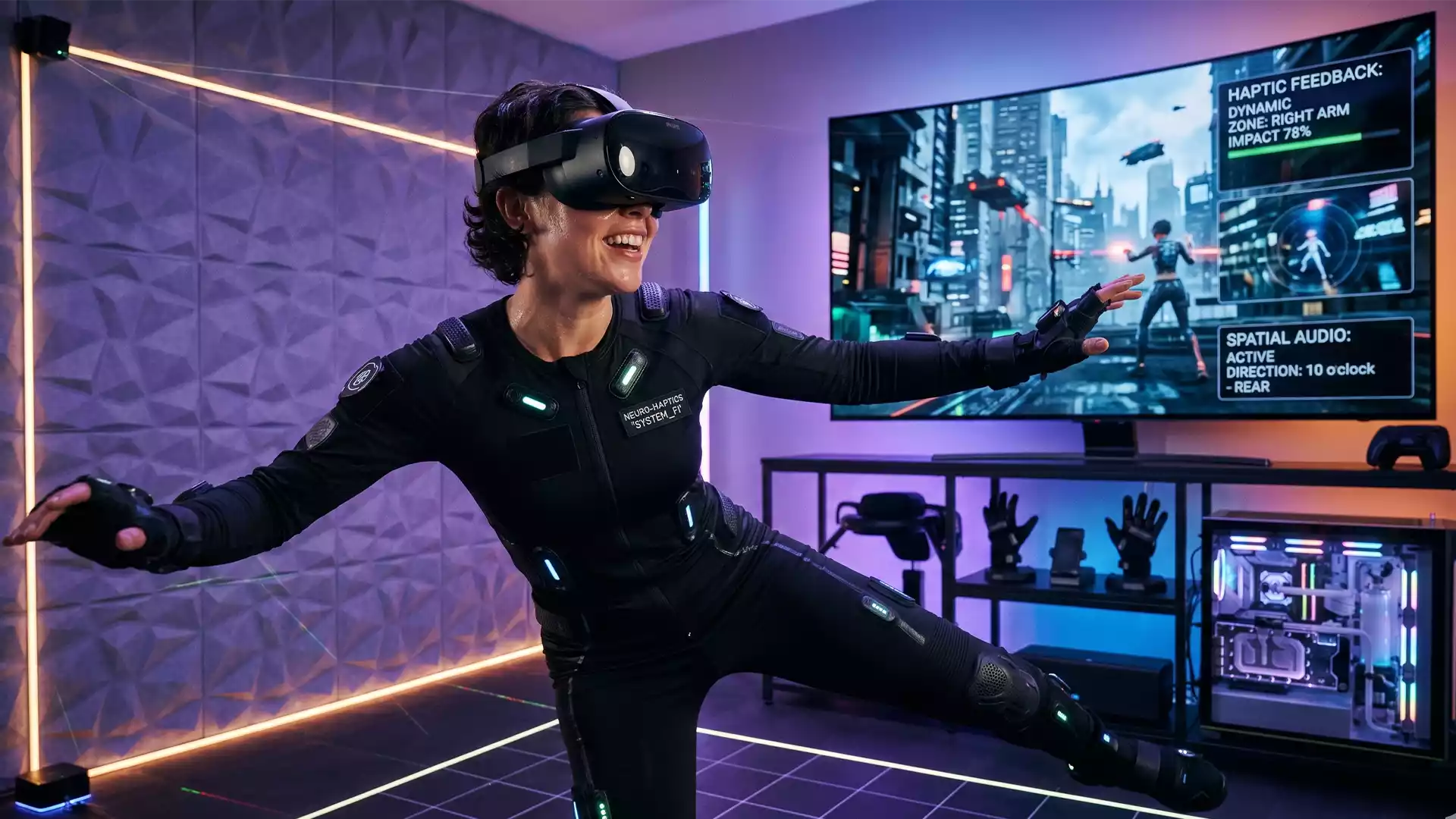
Imagine feeling the recoil of a weapon or the rain on your skin. Haptic feedback technology makes this possible. Vests, gloves, and full-body suits use vibrations and pressure. They simulate touch and impact with stunning accuracy. This adds a physical layer to gaming. As a result, the emotional impact of game events is significantly heightened.
Advanced Audio in Immersive Gaming
Sound is a powerful tool for immersion. Spatial audio technology creates a 3D soundscape. It allows you to pinpoint the location of sounds. You can hear an enemy sneaking up behind you. This enhances realism and provides a competitive edge. Powerful hardware from companies like NVIDIA helps process these complex cues.
The Future of This Transformative Gaming Technology
The journey is far from over. Immersive gaming technology continues to push boundaries. AI is playing a huge role in creating dynamic worlds. These advancements are supported by leading AI and ML services. Furthermore, we see platforms like SteamVR and game engines from Epic Games constantly innovating. We are heading towards a future where virtual experiences are indistinguishable from reality. If your business wants to explore this future, it’s a good idea to contact experts in the field. This technology has applications across many sectors. Learn more about innovation and how it can transform your industry.