
The tech world is witnessing a monumental shift. We are moving beyond simply using AI tools; we are entering the era of AI-First Engineering. This is not just a buzzword. It is a fundamental rethinking of how we build, test, and deploy software. As we approach 2026, understanding this trend is crucial for staying ahead.
Defining AI-First Engineering in the Modern Tech Landscape
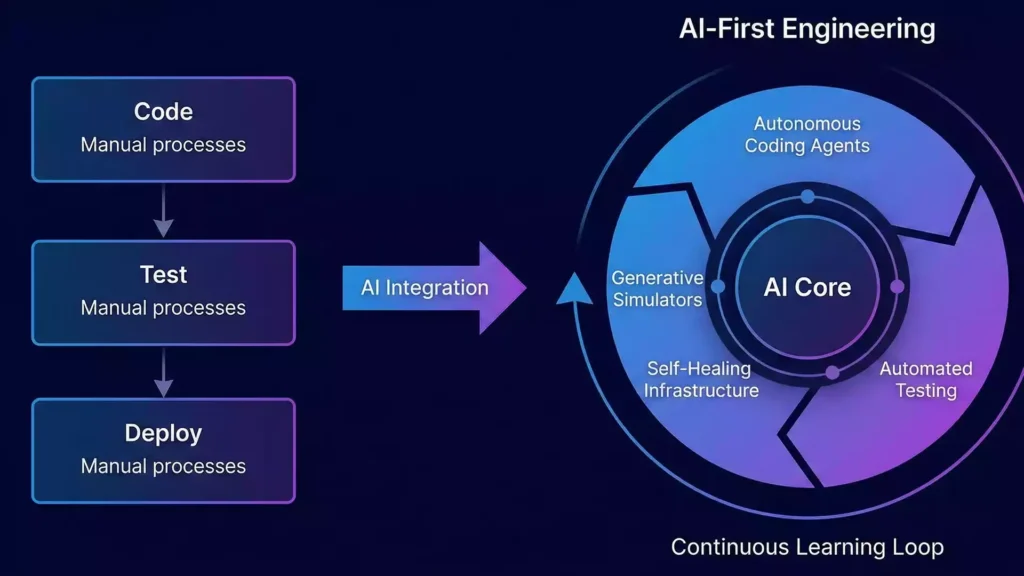
So, what is AI-First Engineering? It is an approach where artificial intelligence is the central component of the software development lifecycle (SDLC). It goes beyond using AI coding assistants. Instead, AI agents are actively involved in architecting solutions, writing code, and even managing infrastructure. For example, tools like Zencoder’s AI Orchestration layer are helping teams transition from “vibe coding” to structured AI engineering. This shift is driven by the realization that current large language models (LLMs) can produce code that looks correct but may fail in production. Therefore, a more integrated approach is necessary.
Furthermore, this new paradigm is about empowering developers, not replacing them. AI handles repetitive tasks, freeing up human engineers for creative problem-solving. This is evident in the rise of open-source projects like AGENTS.md, which are setting standards for AI coding agents.
How AI-First Engineering Impacts Your Development Process
The impact of AI-First Engineering is profound. It affects everything from project management to quality assurance.
Accelerating Development with Autonomous AI Agents
One of the most significant changes is the introduction of autonomous AI agents. These agents can execute complex tasks without constant human intervention. For instance, Meta’s acquisition of Manus AI signals a move towards “agentic” systems that can handle end-to-end processes. Imagine an AI that not only writes the code but also tests it and deploys it. This level of automation can drastically reduce time-to-market. Companies that embrace this will have a significant competitive advantage.
For those looking to build their own platforms, our Website Development services can help you integrate these cutting-edge technologies. We understand the importance of staying ahead of the curve.
Enhancing Quality and Security through Generative Simulators
Another key aspect is the use of generative simulators for testing. Companies like Patronus AI are developing generative simulators to provide adaptive training environments for agents. This ensures that AI models are robust and reliable before they are deployed. Furthermore, security is being integrated earlier in the lifecycle, a practice known as DevSecOps. JFrog, for example, has launched an end-to-end DevSecOps platform specifically for AI applications.
At KrustyLab, we prioritize security in all our projects. You can read about our commitment to secure practices in our Privacy Policy.
Preparing for the AI-First Future
To prepare for this future, organizations must invest in the right tools and training. It is not just about buying the latest AI software. It is about fostering a culture of innovation and adaptability.
Here are some steps you can take:
- Educate your team: Provide training on AI concepts and tools.
- Start small: Implement AI in a pilot project to learn and iterate.
- Focus on data: AI requires high-quality data to be effective. Ensure your data is clean and accessible.
- Partner with experts: Consider working with a company like KrustyLab to guide you through the process. Our Services cover a wide range of software needs.
The transition to AI-First Engineering is inevitable. By embracing it now, you can position your organization for success in the years to come. Check out our Logs for more insights into the latest tech trends.
In conclusion, AI-First Engineering is more than just a trend. It is the future of software development. It promises faster delivery, higher quality, and greater innovation. Are you ready to make the shift? Contact us today to learn how we can help you navigate this exciting new landscape.