
The digital landscape has shifted dramatically this year. Agentic AI cyber attacks are now the primary threat facing businesses and individuals in 2026. Unlike older threats, these autonomous programs do not just follow scripts. Instead, they think, adapt, and execute complex breaches without human guidance. Consequently, traditional firewalls often fail to stop them.
Understanding Agentic AI Cyber Attacks
Hackers deploy these intelligent agents to infiltrate networks silently. Agentic AI cyber attacks leverage machine learning to mimic legitimate user behavior. Therefore, they bypass standard detection tools easily. For instance, an AI agent might study an employee’s email style. Then, it crafts a perfect phishing message. This level of sophistication makes social engineering harder to spot.
Furthermore, these attacks occur at machine speed. Human analysts cannot keep up with the rapid pace of autonomous exploits. As a result, organizations must adopt AI-driven defenses. You can learn more about securing your infrastructure by visiting our Services page. We provide cutting-edge solutions for these modern risks.
The Rise of Shadow Agents
A major component of agentic AI cyber attacks is the “Shadow Agent.” These are unauthorized AI tools used within a company. Employees often use them for productivity. However, they create blind spots in security. Attackers hijack these tools to exfiltrate data. Thus, visibility is crucial.
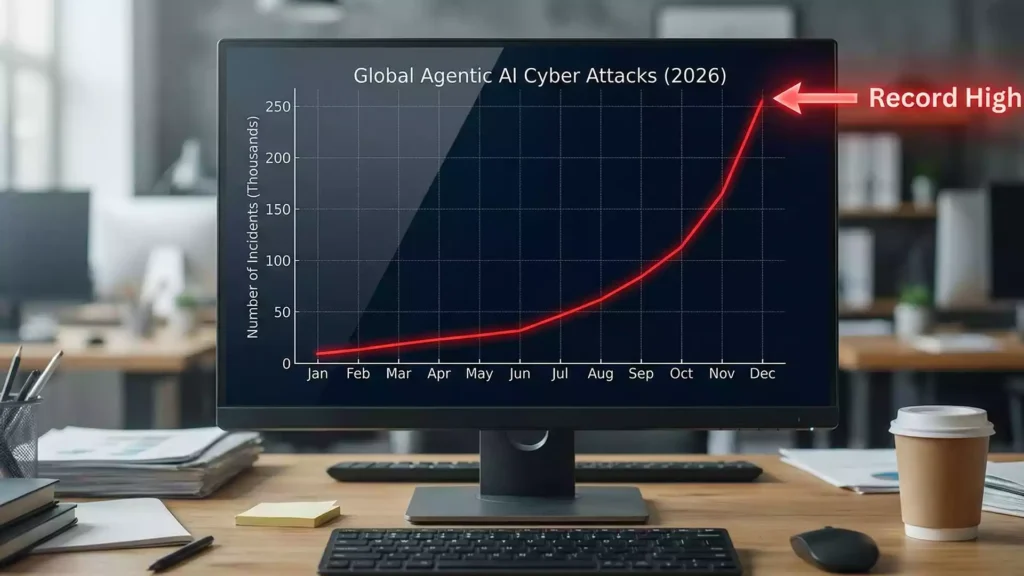
You should regularly check our Logs for the latest updates on vulnerability patterns. Staying informed is your first line of defense. Moreover, Google Cloud Security reports a surge in these incidents. Security teams must now monitor both human and non-human identities.
Defending Against Autonomous Threats
To combat agentic AI cyber attacks, you need a proactive strategy. First, implement “Zero Trust” architecture. This method verifies every user and device. Second, use AI to fight AI. Automated defense systems can detect anomalies faster than any human.
- Audit regularly: Scan your network for unauthorized AI tools.
- Educate staff: Train employees to recognize deepfakes.
- Update policy: Review your Privacy Policy to cover AI data handling.
In addition, reliable threat intelligence is vital. Platforms like The Hacker News offer daily updates on these evolving threats. Also, CISA provides guidelines for enterprise security.
Conclusion
The era of agentic AI cyber attacks demands vigilance. We must adapt our defenses immediately. Technology evolves, and so must we. If you need assistance, please Contact us today. Protect your digital assets from the next generation of threats. Finally, explore resources from Palo Alto Networks for deeper technical insights.