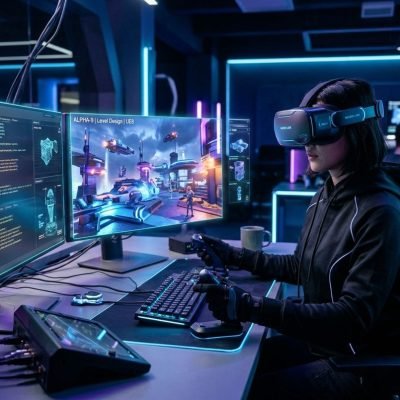
Modern entertainment relies heavily on cutting-edge hardware and real-time graphics. Player expectations continue to rise every single year across global markets. Consequently, game studios must embrace new design methodologies to remain highly competitive. Today, immersive game tech bridges the gap between human imagination and digital reality. High-refresh displays and complex neural networks enable seamlessly responsive virtual worlds. Furthermore, developers craft deeper narrative structures that adapt directly to individual user decisions. As a result, virtual environments feel more living, breathing, and emotionally resonant than ever before.
Core Innovations Behind Immersive Game Tech
Real-time ray tracing delivers breathtaking lighting accuracy across dynamic digital environments. Consequently, virtual scenes appear astonishingly natural and expressive to the human eye. Developers regularly leverage advanced real-time rendering engines to build lifelike environmental textures effortlessly. In addition, next-generation haptic controllers provide remarkably precise tactile physical responses. Gamers feel distinct surface textures, subtle force resistance, and realistic impacts during intense gameplay sessions. Thus, physical feedback loops become far more convincing and engaging for players worldwide.
How Interactive Gaming Platforms Evolve
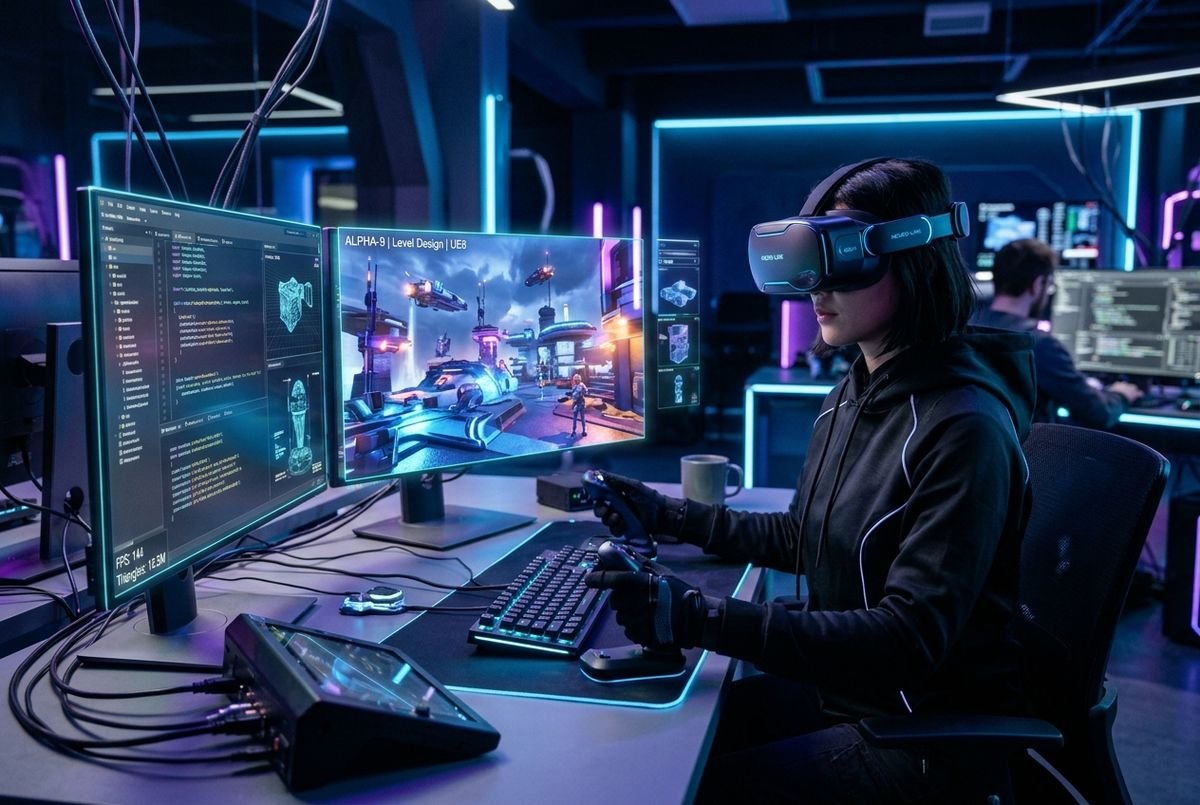
Hardware improvements alone cannot guarantee total player immersion and satisfaction. Creative level design must actively support player agency, atmospheric depth, and intuitive exploration. Therefore, software engineers implement advanced machine learning algorithms to optimize system performance dynamically. You can explore our latest articles to discover detailed technical analysis regarding modern rendering workflows. As cloud infrastructure expands rapidly, latency decreases significantly across competitive multiplayer networks. Consequently, cross-platform gaming feels faster, smoother, and far more cohesive than in previous hardware generations.
Spatial Audio and Interactive Software
Sound engineering plays an indispensable role in establishing true digital presence. Modern directional audio engines simulate physical sound propagation across complex environments accurately. Consequently, players easily identify distant environmental threats purely through subtle acoustic cues. You can review our creative portfolio to see how our team implements high-fidelity sound architecture. This elevated spatial awareness increases player concentration and directional orientation during fast-paced competitive encounters. Ultimately, sound design creates half of the total gaming immersion experience.
Next-Gen Interactive Systems
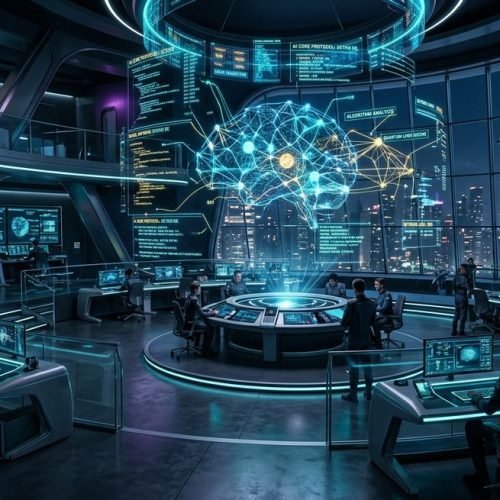
Building these sophisticated digital environments requires specialized technical mastery and creative vision. Software engineers must continuously refine complex physics simulation engines and artificial intelligence behaviors. Our skilled development specialists leverage immersive game tech to craft unforgettable interactive digital adventures. Do you want to build groundbreaking software projects for your business? You can contact our studio team directly to discuss your custom project vision. You can also send us a direct message at contact@krustylab.com for professional consultation. Alternatively, call our office at +234 813 681 1397 to speak with an expert consultant today. Together, we can shape the future of interactive digital entertainment.